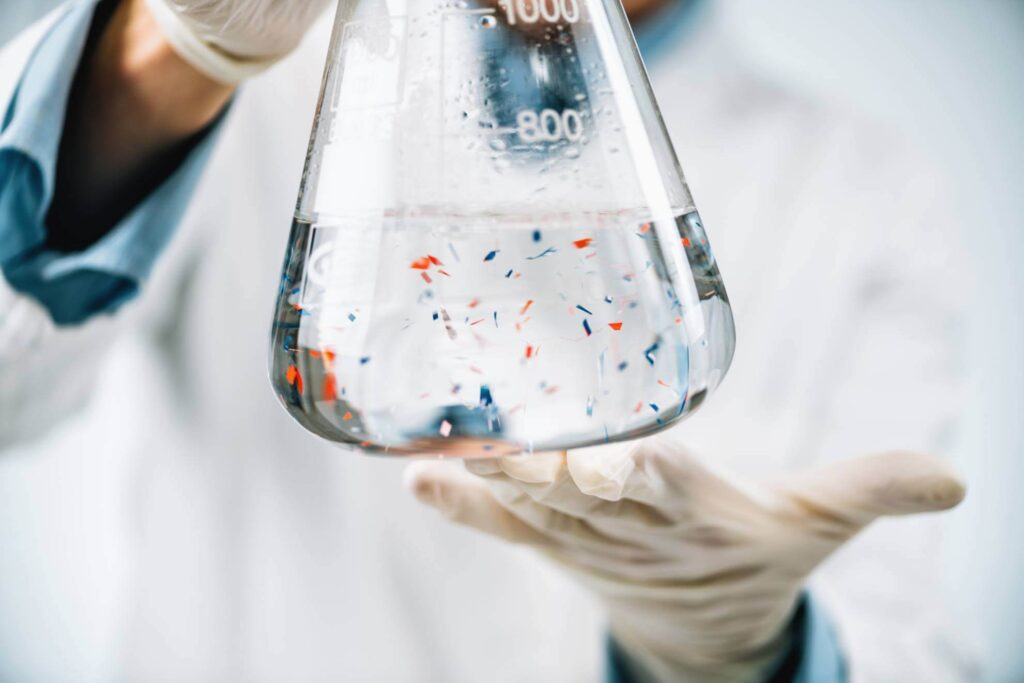
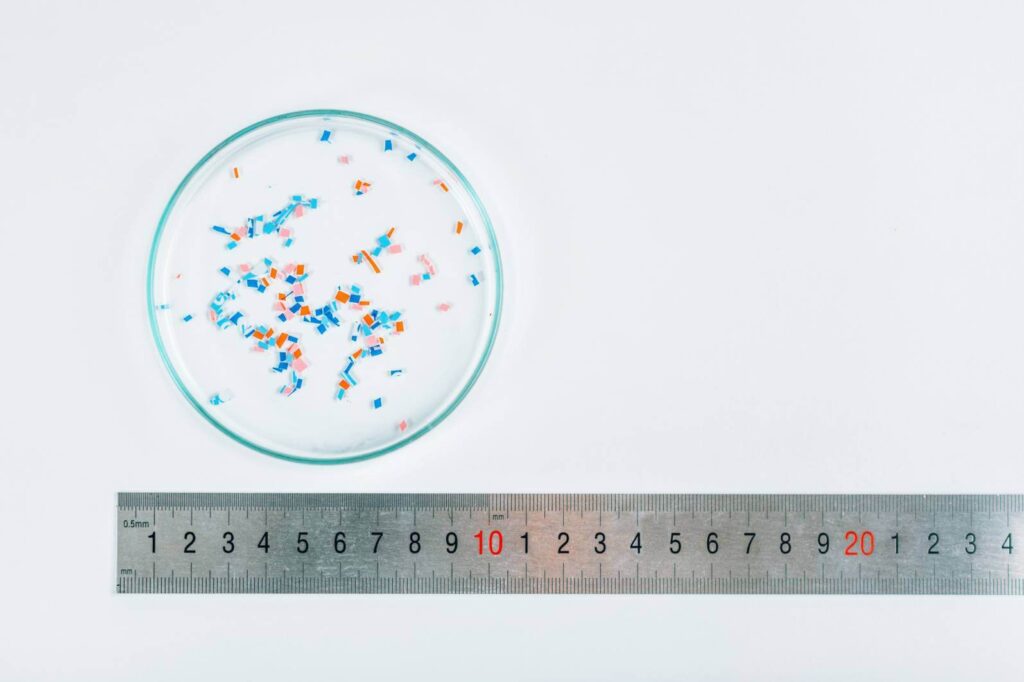
In the 1970s, commodity plastic use soared, with single-use, disposable items dominating most industries. Quickly, plastics overfilled landfills. Now, we find plastic everywhere: on mountain tops, on the bottom of lakes and oceans, and even in our bodies. All plastic ever produced is still in existence and some of it broke down in smaller pieces due to UV rays and friction with water, becoming microplastics. These particles behave different from all the others known to us. They are a new class of substance. Microplastics come in different shapes and different compositions. These characteristics make them a complex subject to study. As confirmed by a report published in Nature in 2021, it is estimated that there are between 15 and 51 trillion microplastics floating on surface waters in the world (data processed in 2015).
Microplastics can be divided into two types.
Primary microplastics: intentionally produced small. We can find them in cosmetics, toothpastes, household products, detergents and glitter.
Secondary microplastics: fragments from a water bottle, plastic bag, fibers from rope, netting and synthetic clothing are formed following the degradation of plastic products that ended up in the sea. They account for about 68-81% of the microplastics in the ocean.
Consequences of Microplastics on our Health
Microplastics are ingested by marine life and travel all the way up through the food chain. We ingest microplastic by consuming oyster, clams, and fish. But microplastics can also be found in unexpected food such as beer, honey, and salt. It’s estimated that the average person consumes up to 5 grams of microplastic every week, which is the equivalent to the weight of a credit card.
The study of microplastics is a new one and our knowledge of the impacts of microplastics is still limited.
Gut microbiome is affected by microplastics that we ingest, and this is not a good sign. Gut microbiome is important to take in nutrients and essential for our immune system.
Health risks are also caused by chemicals added to plastic, such as BPA which does interfere with hormones and DEPH which may cause higher risk of developing cancer.
Scientists are still trying to figure out the health effects of microplastics on our bodies, but studies suggest that microplastics can create toxicity within the organs and tissues.